Global Typing Speed Report: WPM Benchmarks by Country & Profession
Have you ever finished a typing test and wondered, "Is my score actually any good?" You see the number—45, 60, maybe even 80 Words Per Minute (WPM)—but without context, it's just a number. Where do you really stand compared to others in your country, your profession, or your age group? This report answers that question.
Knowing your WPM is the first step, but understanding where you fit in the global picture turns data into insight. It helps you set realistic goals, identify areas for improvement, and appreciate the skills you already have. We’ve gathered data to show you exactly how typing speeds vary across the world.
This article breaks down typing speed benchmarks by country, career, and other demographic factors. By the end, you'll have a clear picture of global typing standards. Ready to see how you measure up? You can get your personal benchmark by taking a quick WPM test on our platform.
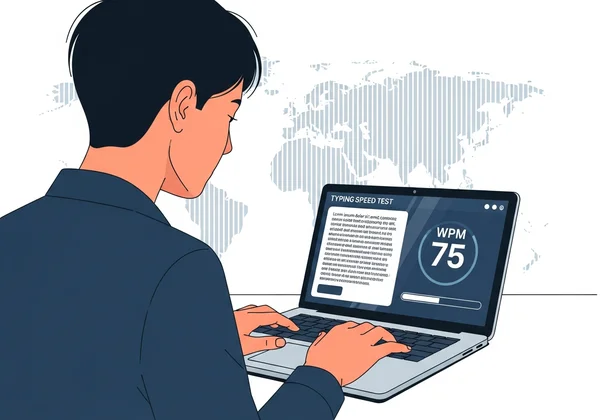
Global Typing Speed Averages: The Numbers Behind the Keyboard
Before we dive into specifics, let's look at the big picture. The average typing speed for most people is around 40 WPM. This is the speed you might expect from a casual computer user who types regularly but hasn't focused on specific training. However, this number can change dramatically based on several factors.
Think of 40 WPM as a starting point. Many office jobs require at least 50 WPM, while specialized roles like transcriptionists or programmers often need much higher speeds. Our data shows that factors like age, practice frequency, and even gender can influence these averages. Let’s explore what the numbers reveal about typing performance worldwide.
Demographic Typing Performance: How Age & Gender Correlate with Speed
Age and gender play a role in typing proficiency. Younger generations, or "digital natives," grow up with keyboards and tend to develop typing skills early. Our analysis shows that individuals between 18 and 30 often have the highest average WPM scores, frequently reaching 50-60 WPM.
When looking at broad datasets, female typists tend to have a slight edge in both speed and accuracy compared to their male counterparts. This is often attributed to a higher prevalence of touch typing practice among women, particularly in administrative roles where high WPM is a core job requirement. However, individual skill is far more important than any demographic average, and the gap is easily overcome with dedicated practice.
The Power of Practice: How Consistency Boosts Your WPM
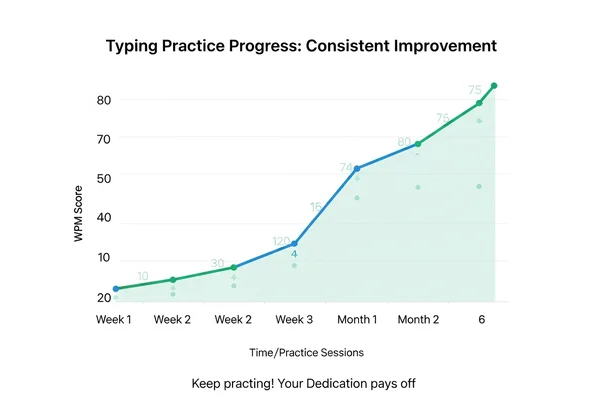
Consistent practice is the most crucial factor for improving typing speed. The data is clear: more typing leads to faster speeds. Users who practice for just 15-30 minutes a day can see their WPM increase by 5-10 words within a few weeks. Consistency builds the muscle memory that is the foundation of fast, accurate typing.
When you can see your average WPM slowly climbing, it provides the motivation to keep going. Ready to start your daily practice? A quick typing speed test is the perfect way to begin.
Regional WPM Variations: Country-by-Country Typing Analysis
Typing speed isn't just personal; it's also cultural. The language you speak, the education you received, and the prevalence of digital technology in your country all impact average WPM scores. Let's explore how typing performance differs around the globe.
Top Typing Nations: Countries with Highest Average WPM Scores
Some countries consistently produce faster typists. Based on aggregated online data, nations in Northern Europe and East Asia often lead the pack. Countries like Singapore, Hong Kong, South Korea, and Finland frequently top the leaderboards with average WPM scores exceeding 55 WPM. This is often linked to strong educational programs that emphasize computer literacy from a young age and economies with a high concentration of tech jobs.
Language and Education's Impact on Typing Speed
The language you're typing in has a direct impact on your WPM. English, with its relatively short average word length, is a common baseline. Languages with longer compound words, like German, can slightly lower WPM scores even if characters per minute (CPM) remain high. Because our platform supports multiple languages, you can see for yourself how your speed changes when you switch between them.
The emphasis on keyboarding skills in a country's school curriculum is also a powerful predictor of its national WPM average. Where touch typing is a mandatory class, students build a strong foundation for a lifetime of efficient typing.
Professional WPM Benchmarks by Career
For many, typing speed is a professional necessity. What is a good WPM for your job? The answer varies greatly by industry. A faster typing speed can directly translate to higher productivity and better job performance. Whether you're a student preparing for the workforce or a professional looking to get ahead, knowing your industry's benchmark is essential. If you're not sure where you stand, take a moment to check your speed.
Office Workers vs. Programmers: 50-75 WPM
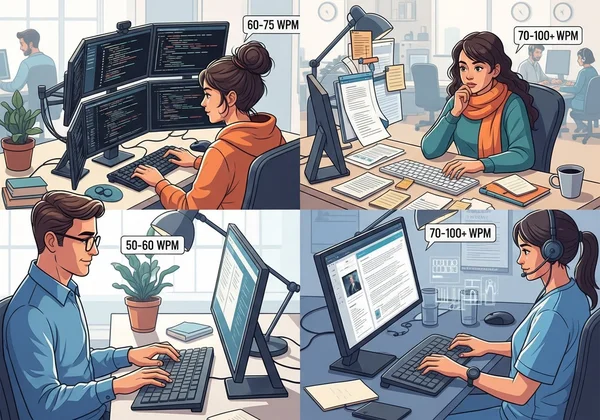
For general office workers, a speed of 50-60 WPM is proficient for handling emails and reports efficiently. Programmers and developers have unique needs. While they also need to be fast, their typing involves a mix of words and complex symbols. Many skilled programmers type between 60 and 75 WPM, with a strong focus on accuracy to avoid syntax errors.
Healthcare & Writing Professionals: 70-100+ WPM
In healthcare, speed and accuracy are critical. Medical transcriptionists often need to type at 80-100 WPM or more with flawless accuracy. For writers and journalists, typing speed is linked to creative output. Most professional writers aim for 70 WPM or higher to capture ideas as they flow. A slow speed can become a frustrating bottleneck.
Beyond Speed: Accuracy and Efficiency
While WPM is the most talked-about metric, it only tells half the story. High speed is useless if your text is full of errors. True typing efficiency comes from a balance of speed and accuracy. Correcting mistakes takes time and breaks your rhythm, ultimately slowing you down.
Finding Your Optimal Balance
Every typist has a sweet spot where speed and accuracy meet. The goal is to find the fastest speed you can maintain with 98% accuracy or higher. A great way to find this balance is through practice. As you complete a typing test, pay attention to the feedback. If you see many errors, slow down slightly and focus on clean typing.
How Experience Affects Error Rates
Beginner typists often have high error rates (10% or more). As they learn proper touch-typing, accuracy improves to 95-97%. Expert typists, who regularly exceed 80 WPM, can maintain an incredible accuracy of 98-99% because their fingers move from muscle memory, freeing their minds to focus on the content.
The Multilingual Advantage
Can speaking multiple languages make you a better typist? The evidence suggests it might. Multilingual individuals regularly switch between different linguistic structures and patterns. This mental flexibility strengthens their finger dexterity and muscle memory when applied to keyboarding. Our platform’s multi-language support is a perfect way for multilingual users to leverage their skills and start a test in the language of their choice.
Your Next Steps: Benchmark and Improve Your Typing Performance
We've explored how typing speed and accuracy vary across the globe, between professions, and based on practice. You now have a clear set of benchmarks to compare yourself against. You know the global average is around 40 WPM, but that professionals in many fields type much faster. Most importantly, accuracy is just as critical as speed.
Understanding benchmarks is helpful, but actually testing and improving your skills is where real progress happens. Don't just wonder where you stand—find out.
Ready to supercharge your typing skills? Start by finding your baseline speed—it's your first step toward becoming a more efficient typist. Take a free, instant, and accurate WPM test online right now. See your score, compare it to these benchmarks, and start your path to improvement today.
FAQ Section
What is considered a good typing speed globally?
A typing speed of 40 WPM is around the global average. However, a "good" speed is relative. For students and most office professionals, 50-60 WPM is a solid target. For specialized roles like programmers or writers, aiming for 70 WPM or higher is beneficial.
How does my WPM compare to others in my profession?
As outlined in this report, benchmarks vary. Administrative roles often require 50-60 WPM, while programmers and writers typically aim for 65-75 WPM and higher. The best way to know is to take a typing speed test and compare your results to the standards for your field.
How accurate should I be when I type?
You should always aim for an accuracy rate of 98% or higher. High speed with low accuracy is inefficient because correcting errors takes time and disrupts your flow. You can monitor both metrics easily when you see your results on our platform.