60-Second WPM Test: What It Measures and What It Misses
A 60-second typing test is appealing for a simple reason: it gives an answer fast. You start the timer, type for one minute, and see a number that feels concrete enough to judge.
That quick answer is useful. It can show whether your typing speed is moving up, whether accuracy is falling under pressure, and whether today's rhythm feels smooth or scattered. On a typing speed test, that fast feedback is the product.
The catch is interpretation. A one-minute score can be informative without being complete. If you read it as a quick snapshot, it helps. If you read it as your permanent level, it starts to mislead.
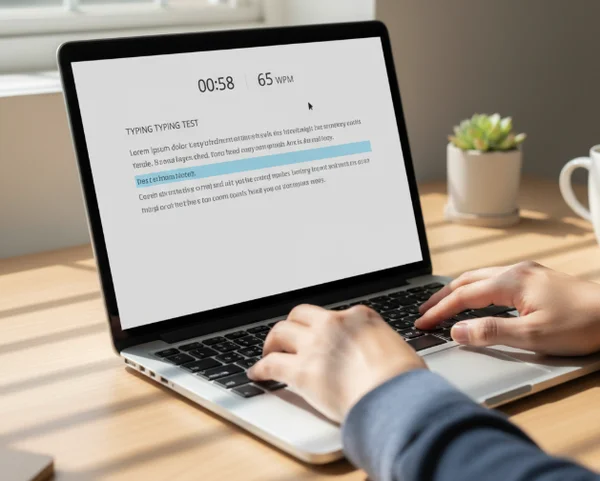
Why a 60-second score feels clear but needs context
Short tests are good at lowering the barrier to action. You do not need a big training block, special setup, or much patience to get started. That is part of why one-minute tests work so well on the web.
They also match how many users actually behave. Someone wants a fast check, not a formal session. A one-minute result meets that need and gives a real sense of current speed, rhythm, and error control.
But fast tests compress a lot into a small window. A warm-up problem, an awkward line of text, or a rushed opening can influence the result more than people expect. That is why context matters alongside the score itself.
The site's instant score page is most helpful when you treat it as immediate feedback, not a final label.
What a 60-second WPM test measures well
A one-minute typing test is strong at capturing a quick performance snapshot. It tells you how fast you typed during that run, how many errors showed up, and whether your current rhythm held together for the full minute.
That is already enough to make useful decisions. If the score dropped because accuracy collapsed, you need different practice than someone whose typing stayed clean but slowed near the end.
A quick snapshot of speed, accuracy, and rhythm
Stanford's [text-entry research] explains the standard WPM convention as total characters divided by 5, then adjusted for time in minutes. That is why typing tests usually treat 1 word as 5 characters, including spaces, rather than one dictionary word.
Iowa's [state typing-test instructions] use a similar scoring logic for formal 5-minute tests. They define gross WPM as the total words typed during the test divided by 5, and net WPM as gross WPM minus the number of errors. That makes a one-minute online result useful because it still sits inside a familiar scoring tradition: speed matters, but clean typing matters too.
A 60-second run is also good at showing rhythm. You can feel whether you settled into a steady pace, hesitated on unfamiliar words, or rushed to recover after a mistake. That kind of immediate pattern is hard to ignore when the test is short.
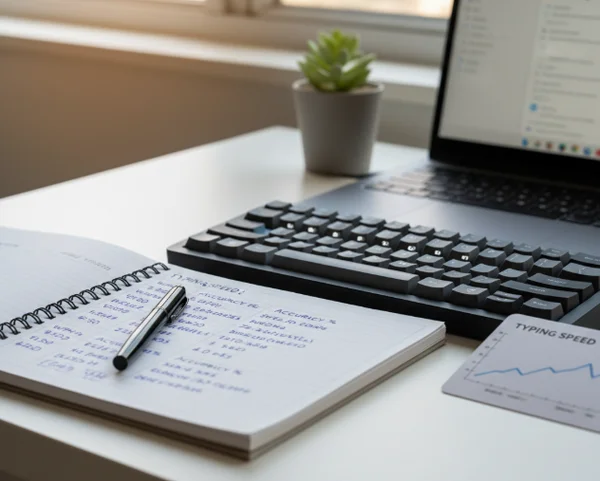
What a single 60-second run can miss
A one-minute score can still be noisy. It reflects your performance in a small slice of time, which means small disruptions can matter more than they would in a longer or repeated test setup.
The first few seconds are a good example. If you begin too hard, mistime your hand rhythm, or stumble over the first line, the score may say more about your start than your overall typing ability.
One fast result is not always a stable average
West Virginia's [typing-estimate guidance] gives a simple rule for repeated testing. If the first 3 test scores vary by more than 10 WPM, the user should take 3 more tests or start over. That advice is useful because it treats typing performance as something that becomes clearer through repeated runs, not through one dramatic result.
The same guidance also warns that scores with many errors should be viewed cautiously. A fast run that sprays mistakes across the line may look exciting at first glance, but it is not the same thing as dependable typing.
This is where short tests can fool people in both directions. A bad first run can make a capable typist think the session is lost. A lucky first run can make someone assume the score is already stable. In both cases, the problem is not the one-minute format itself. The problem is trusting one run more than the pattern around it.
How to use a one-minute result more responsibly
The smartest way to use a quick test is to make it part of a small sequence. Run the test, review the score, and decide what exactly you are testing next instead of mindlessly hitting retake.
That keeps the site useful as a feedback loop instead of a slot machine. If you change nothing between attempts, you may learn less than you think. If you change one clear variable, the next score becomes easier to interpret.
Repeat, compare, then change one practice variable
A practical routine can stay simple:
- Use the first run as a baseline, not a verdict.
- Repeat the test enough times to see whether the score is settling or bouncing.
- Track accuracy alongside speed instead of chasing WPM alone.
- Change one practice variable at a time, such as text familiarity, focus level, or keyboard posture.
- Use the site's custom practice tools when you want the text to match real work more closely.
This approach makes retesting more honest. If a score rises after better focus but accuracy falls, that means something different than a score rise with stable accuracy. If a score drops after a harder text type, the result may reflect the new material rather than a sudden skill loss.
It also helps to separate training from identity. A one-minute score is useful for planning your next drill, your next text choice, or your next retest. It is not a permanent definition of whether you are a fast typist or a slow typist.
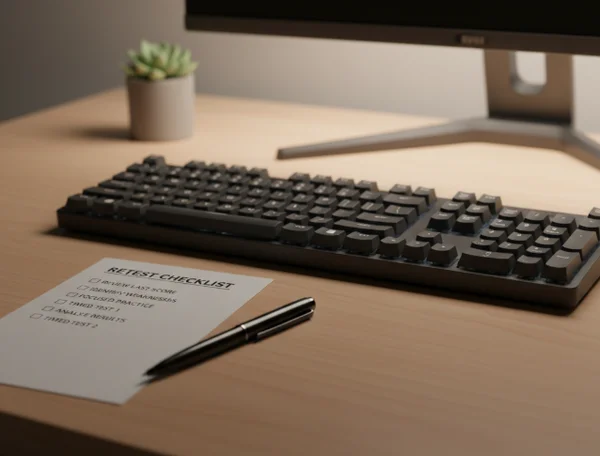
Key Takeaways: Use quick tests for feedback, not identity
A 60-second WPM test measures real things well: speed, accuracy, and the quality of your rhythm in a short window. That makes it valuable, especially when you want immediate feedback.
What it misses is stability across time. Compare multiple runs and watch accuracy closely. Then turn the site's quick retest flow into a smarter practice loop instead of a one-score judgment. When you do that, the one-minute format becomes a strong tool for improvement rather than a noisy number you overthink.