WPM Test for Writers: Average Typing Speed & Productivity
As a writer, your most valuable asset is the flow of ideas from your mind to the page. Yet, a common bottleneck often stands in the way: the physical act of typing. If your fingers can't keep up with your thoughts, creativity gets interrupted, deadlines feel tighter, and productivity suffers. How much more could you achieve if you could close that gap?
Writers, journalists, bloggers—if your keyboard feels like it's holding you back, this is your playbook to make it a speed machine. We will explore industry benchmarks for typing speed, share practical strategies to boost your Words Per Minute (WPM), and show you how to track your improvement. The first step is knowing where you stand, and you can get your baseline score in just 60 seconds.

What is a Good Typing Speed for Authors & Journalists?
Before you can improve, you need a benchmark. In the world of typing, speed is measured in WPM, or Words Per Minute. This metric calculates how many words you can accurately type in one minute. While it seems simple, understanding what constitutes a "good" speed is crucial for setting realistic goals for your writing career.
The average person types around 40 words per minute. However, for professionals whose job revolves around the written word, that number is often considered the starting line, not the finish. A higher typing speed directly translates to faster drafting, quicker revisions, and more efficient communication.
Benchmarking Your WPM: Industry Standards for Writers
So, what should you be aiming for? While every writer's needs are different, certain industry standards can provide a helpful frame of reference. A faster speed isn't about bragging rights; it's about enabling your professional workflow.
Here’s a general look at WPM benchmarks relevant to writing professions:
- Average Typist: 40 words per minute. This is sufficient for casual emailing and basic document creation.
- Professional Administrative Roles: 50-60 WPM. These roles require frequent and accurate data entry and correspondence.
- Professional Writers & Journalists: 60-80 words per minute. This range is often seen as the sweet spot for efficiency. It allows you to draft articles, reports, and manuscripts quickly without sacrificing quality.
- Transcriptionists & Coders: 75-90+ WPM. These specialized fields demand exceptional speed and accuracy to keep up with audio recordings or complex code syntax.
For most authors and content creators, aiming for the 60-80 WPM range is a fantastic goal. It ensures your typing speed is an asset, not a hindrance.

The Link Between WPM and Writing Productivity
The connection between typing speed and productivity is direct and measurable. Imagine you need to write a 2,000-word article. A writer at 40 words per minute would need about 50 minutes of pure typing time. In contrast, one at 70 words per minute could finish in under 29 minutes. That’s a saving of 21 minutes on a single article.
Over a week, a month, or a year, these saved minutes add up to hours and even days. This reclaimed time can be used for research, editing, or simply taking a well-deserved break. More importantly, fast typing preserves your creative momentum. When you can get a thought down on paper the moment it strikes, you stay in the zone and produce more authentic, powerful work.
Strategies to Boost Your WPM and Writing Efficiency
Knowing your target WPM is one thing; achieving it is another. Improving your typing speed is a skill that requires deliberate practice and the right techniques. It’s not just about moving your fingers faster—it's about typing smarter. Here are proven strategies to help you increase both your speed and overall writing efficiency.
Custom Practice: Typing Your Own Drafts and Notes
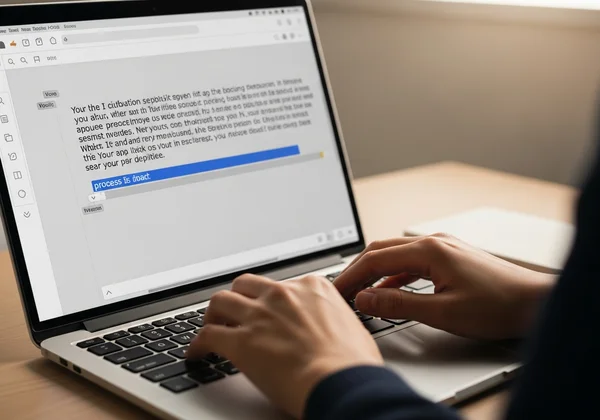
Generic typing tests with random words are great for warm-ups, but their effectiveness can be limited for writers. The vocabulary you use daily—whether it's for a fantasy novel, a technical report, or a journalistic piece—is unique. Practice with your own text—it's the smartest way to improve.
Skip 'the quick brown fox.' Instead, paste a paragraph from your project, notes, or email into a customizable tool. Practicing with your own material builds muscle memory for the specific words and phrases you use most often. This targeted approach makes your practice sessions more practical and directly applicable to your work. You can try our free tool that supports custom text for a more personalized practice experience.
Mastering Accuracy and Sustained Input for Long-Form Content
Speed is meaningless without accuracy. A high score with only 90% accuracy? You'll waste time backspacing. That kills your flow. Prioritize 98%+ accuracy first.
For authors and long-form content creators, another crucial skill is typing stamina. It's one thing to type quickly for a one-minute test, but it's another to maintain that pace and accuracy over a 30-minute or hour-long writing session. Build your endurance by gradually increasing the duration of your practice tests. This trains your fingers and your focus for the marathon sessions required to write a chapter or a detailed report.
Ergonomics for Writers: Preventing Fatigue and Injury
Your physical setup plays a massive role in your typing performance and long-term health. Poor ergonomics can lead to fatigue, discomfort, and even repetitive strain injuries (RSI) like carpal tunnel syndrome. A comfortable writer is a productive writer.
Follow these ergonomic best practices to protect your body and enhance your typing:
- Sit Up Straight: Keep your back straight and your feet flat on the floor. Your screen should be at eye level to avoid neck strain.
- Maintain Neutral Wrists: Your wrists should be in a straight, neutral position, not bent up, down, or to the sides. Use a wrist rest if it helps you maintain this posture.
- Keep Elbows at 90 Degrees: Adjust your chair height so your elbows are bent at a comfortable 90-degree angle.
- Take Regular Breaks: Use a technique like the Pomodoro Method. Type for 25 minutes, then take a 5-minute break to stretch your hands, wrists, and shoulders.
Tracking Your Progress: Consistent Improvement for Writers
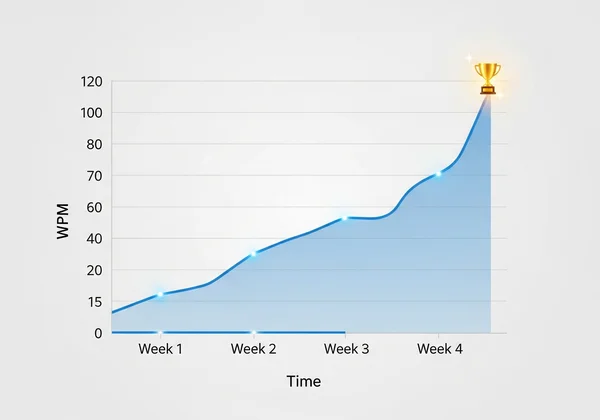
The journey to becoming a faster, more efficient writer is a marathon, not a sprint. The key to lasting improvement is consistency. Set clear goals. Make practice daily. You'll gain momentum and real results in your work.
Setting Achievable WPM Goals for Your Writing Career
Setting a vague goal like "I want to type faster" is not effective. Instead, create specific, measurable, achievable, relevant, and time-bound (SMART) goals. Start by establishing your current baseline with a typing test.
Once you know your starting WPM, set a small, incremental goal. For example, if you are currently at 45 WPM, aim to reach 50 WPM within a month. This small victory is motivating and builds a foundation for future progress. Celebrate each milestone and adjust your goals as you improve. Regularly checking your speed allows you to track your progress and stay motivated.
Incorporating WPM Testing into Your Daily Writing Routine
The easiest way to build a new skill is to integrate it into your existing habits. Don't treat typing practice as a separate chore. Instead, make it a natural part of your daily writing process. A great way to do this is to use a short typing test as a warm-up before you begin writing.
Just as a musician practices scales before playing a piece, a 1- to 3-minute WPM test can get your fingers moving and your mind focused. It activates the neural pathways for typing and prepares you for a productive session. This simple ritual, performed daily, will compound over time, leading to significant gains in both speed and accuracy.
Frequently Asked Questions About Typing Speed for Writers
How can writers improve their typing speed effectively?
The most effective way is through consistent, deliberate practice. Focus on touch typing (typing without looking at the keys) and prioritize accuracy over speed. Use online tools to take regular WPM tests and practice with custom text relevant to your work to build muscle memory for your specific vocabulary.
What is considered a good WPM score for professional authors?
While it varies, a strong target for professional authors, journalists, and content creators is between 60 and 80 WPM. This range allows for a fluid transfer of ideas to the screen, supports high productivity, and helps in meeting deadlines without stress.
Is 70 WPM a good typing speed for journalists and content creators?
Yes, 70 WPM is an excellent typing speed for any writing professional. It is well above the average and enables you to draft articles, take notes during interviews, and produce content at a pace that keeps up with demanding schedules in the media and content industries.
How can I test my typing speed and accuracy with my own writing?
To practice with your own material, you need a WPM test that offers a custom text feature. Simply copy a few paragraphs from your manuscript, an article, or your notes and paste them into the test window. This is the best way to test your skills with words you actually use.
How is a writer's WPM calculated on online tests?
Online tests use a simple formula. Count a 'word' as 5 characters (with spaces/punctuation). Then: (Characters typed / 5) ÷ minutes. So, if you typed 300 characters in one minute, your speed would be 60 words per minute.
Write Faster, Write Smarter: Your Path to Enhanced Productivity
For a writer, typing speed is more than just a number—it's a gateway to greater productivity and creative freedom. By understanding industry benchmarks, implementing smart practice strategies, and consistently tracking your progress, you can transform your typing from a chore into a professional superpower. Remember, the goal is to make the keyboard disappear, allowing your ideas to flow directly onto the page without friction.
Feeling stuck? Hit that test button and see where you start—your breakthrough draft is waiting. Take the free WPM test now and discover your current speed. Your future, more productive self will thank you for it.